

How to be a better communicator when English isn’t your first language
If your teams operate across languages and cultures, communication can easily become complex, slow, or misunderstood. Our Associate Storytelling Trainer, Riccardo Ginevri, reflects on an unexpected request to help address a European-wide communication issue…
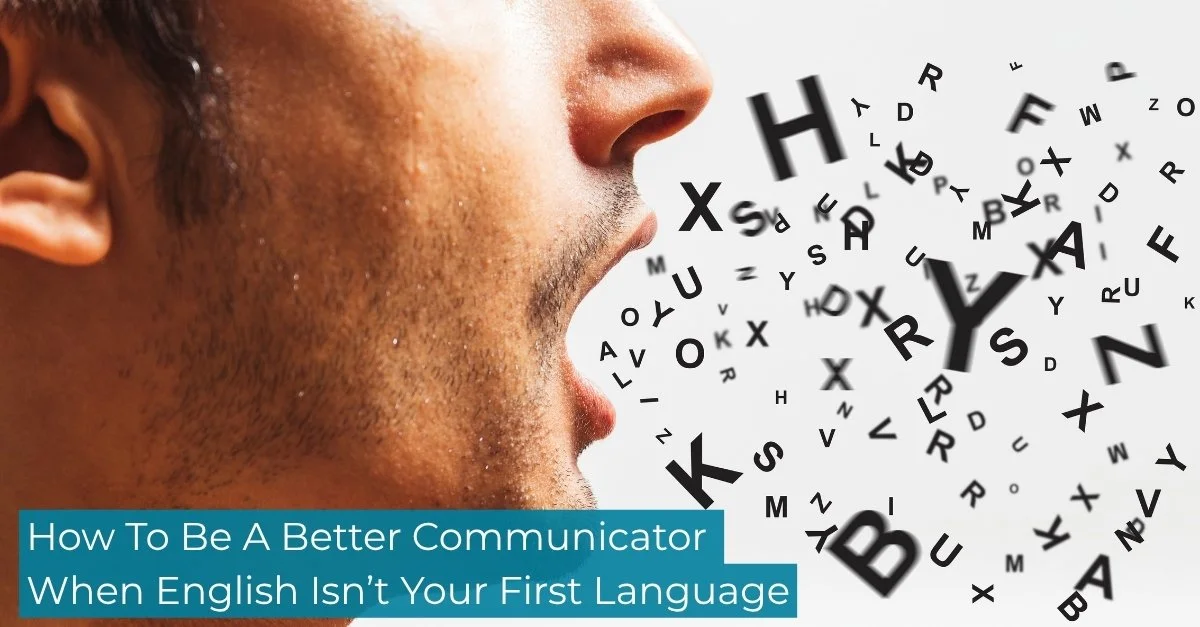
When perfect English doesn’t work
Picture a virtual meeting.
5-20 people connected across Europe: France, Germany, Spain, the UK.
A major, time-critical, security-sensitive network transformation is on the table.
The tension is visible.
The German technical team is frustrated, and the French sponsors are not convinced.
The UK transformation lead steps in to address the situation: the English is perfect, fast and full of jargon.
And yet… something is missing.
No one says it out loud, but several people are not fully following. The details, the nuances, the implications are getting lost somewhere between speed and complexity.
The meeting ends the worst possible way. No decision. No further forward.
An unexpected role
A few hours later, I get the call.
“You say you’re a communicator… a storyteller… a multicultural professional? So, you’re now in charge.”
An Italian in charge of a misunderstanding between Germany, the UK, and Spain… what could possibly go wrong?
[I am joking.]
Let me be clear; English is not my first language.
Like many non-native speakers, I’ve been there: searching for the right word, rehearsing sentences in my head, worrying about getting it wrong.
And yet in that moment, stepping into that situation, I didn’t suddenly become more fluent.
I stepped in with the same “imperfect English”, but I slowed things down. I simplified the message. I connected the dots.
Instead of adding more words, I focused on meaning. Instead of increasing complexity, I reduced it:
I used analogies to explain technical points.
I adapted the language to the audience, not the other way around.
I translated not just words, but intent.
Step by step, things changed. Things became clear and aligned.
Long story short, the team moved forward and delivered the solution.
What changed? Not the language
This is something I’ve seen many times working across international teams.
We tend to believe that communication is about speaking perfect English.
It isn’t.
As Heather Hansen explains, English today is no longer owned by native speakers. It is a shared tool. A bridge between cultures, not a test of fluency.
And this is where it gets interesting.
Working in a second language forces you to develop better communication habits.
You think before you speak and choose words more carefully. You simplify and structure.
Because you can’t rely on speed, idioms or complexity. You must rely on meaning.
It’s also worth noting that in many meetings, the real issue is not language. It is clarity.
Fluency can sometimes hide it. Constraints can sometimes reveal it.
Speaking more does not mean communicating better, and sounding fluent doesn’t guarantee understanding; clear thinking does.
From limitation to advantage
I’ve felt the pressure of finding the right word, the hesitation before speaking and the fear of not sounding “good enough”. Most non-native speakers know this feeling.
But with the right structure and approach, those same constraints become an advantage: they force you to be intentional and push you to focus on what really matters.
This is exactly the space where I now work with professionals and teams, often in collaboration with 13 Times.
Not to make their English perfect. But to make their communication clear, structured, and effective, especially in complex international environments where misunderstandings are costly.
Our Storytelling for Business training helps professionals simplify their message, structure their thinking, and communicate clearly, even when English is not their first language. Our next Storytelling for Business open course starts on Friday, 6th November.
